Scope6 Emissions
- climate
- anthropogenic
Building Anthropogenic surfaced a problem that's easy to underestimate: there's no consistent, reliable way to track and verify ESG commitments over time.
The research made it clear pretty quickly. The ESG reporting landscape had become fragmented, complicated, and oversaturated each framework operating with its own definitions, methodologies, and metrics. Springer In practice, that meant if you wanted to understand how a company's emissions profile had changed year over year, you were often reading through a PDF rather than querying a structured data file. Existing datasets were fragmented, inconsistent, and lacked transparent methodologies, making it difficult to obtain reliable emissions data. Nature
Supply chain complexity made this worse. Scope 3 emissions those generated upstream and downstream through suppliers and customers are notoriously hard to track because the companies you depend on are under no consistent obligation to report in a format you can actually use. Financial firms in particular could expect to have little comparable reporting data from their counterparties about climate risks and emissions. PwC
That's where we saw an opportunity. Banks were one of the first sectors facing hard regulatory pressure around climate disclosure, and they were caught in a bind: they needed to report accurately, but the companies they lent to weren't reporting in any standardized way. Medium-sized banks that hadn't focused on climate reporting were suddenly in the same regulatory bucket as the largest global institutions, facing a daunting challenge of ramping up data collection, verification, and reporting within a limited window of time. PwC
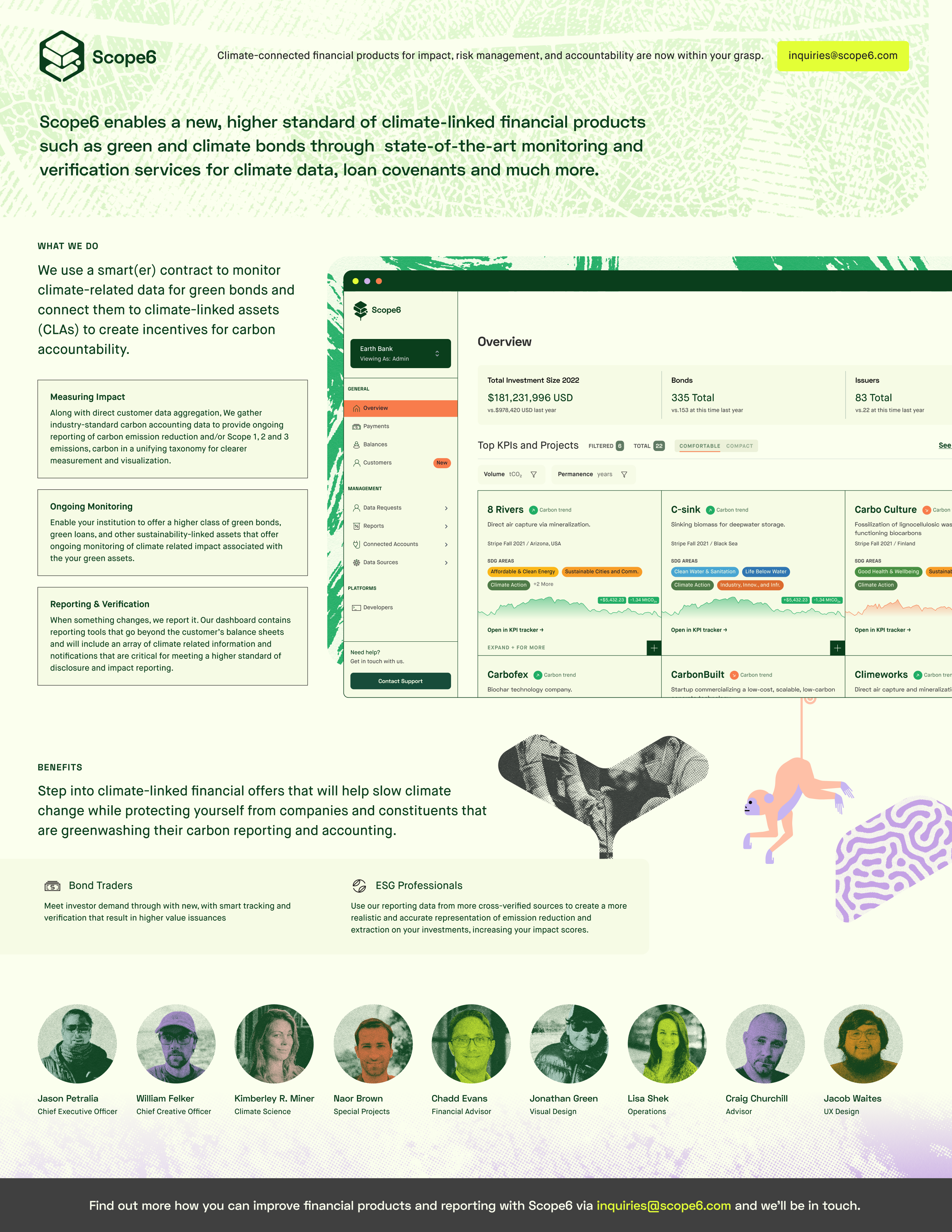
Our response was Scope 6 a platform designed to integrate with banking systems and give institutions a reliable foundation for emissions tracking. The idea was that if banks are required to report, they'd need a layer of infrastructure that could ingest, normalize, and compare emissions data across the companies in their portfolios. Over time, that pressure from the financial sector could drive standardization upstream pushing suppliers and portfolio companies toward more consistent reporting formats so progress could actually be tracked and compared.
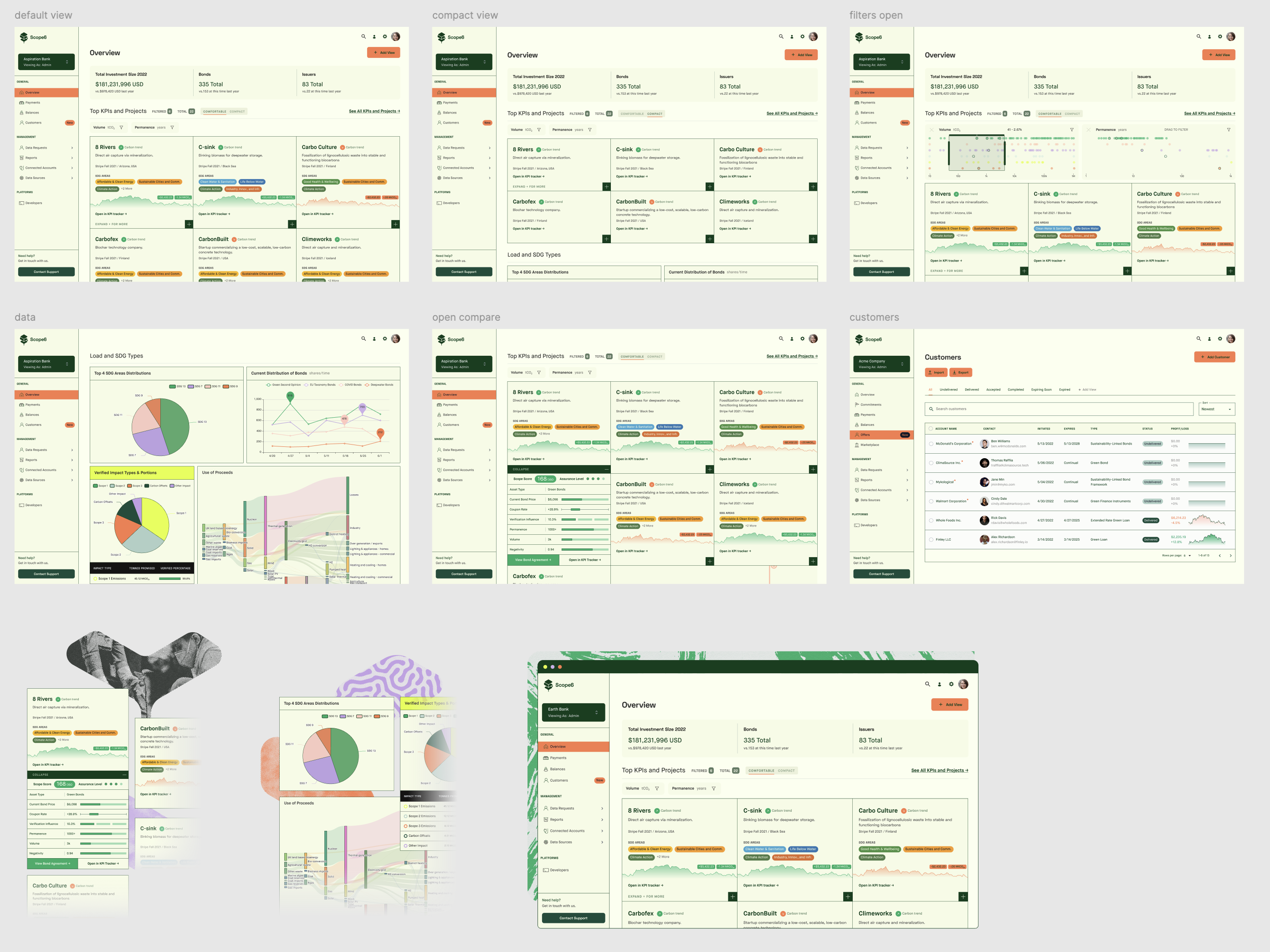
The design work was led alongside Jacob Waites, who built a brand system and visual language for the product, including an Earth API integration for climate goal verification, and a UI approach that tried to make genuinely complex data legible without losing the weight of what it represented.
We got to the concept stage before the project pivoted, and I left the company due to a cofounder mismatch. But the underlying problem that sustainability accountability still largely lives in unstructured documents rather than queryable data hasn't gone away. It's part of what eventually led me toward building infrastructure for environmental data more broadly.